Case Study 1: Credit Feature
Taking a necessary feature from identification to full integration
Project Management
The initial approach
Service Design



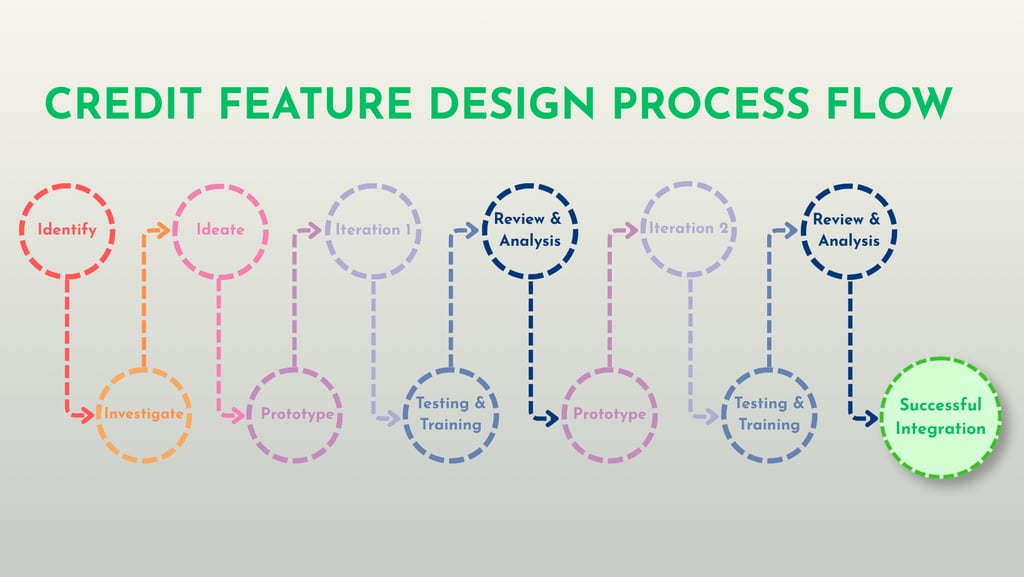
A summary of steps following the initial investigation:
Presented solutions and medium-fidelity prototypes to key stakeholders
Approved brief and visuals supplied to developers
Usability testing on staging environments
1st iteration go-live, with training and support for internal teams
Review of the 1st iteration indicates that the overarching operational inefficiency and compliance issues were addressed, but customer support reports an increase in queries and notes experiencing difficulties understanding the new feature
Investigations with further testing and collecting user feedback reveal design issues: not user-friendly enough, and insufficient forgiveness considerations
Presented solutions and medium-fidelity mockups for 2nd iteration
2nd iteration testing and go-live
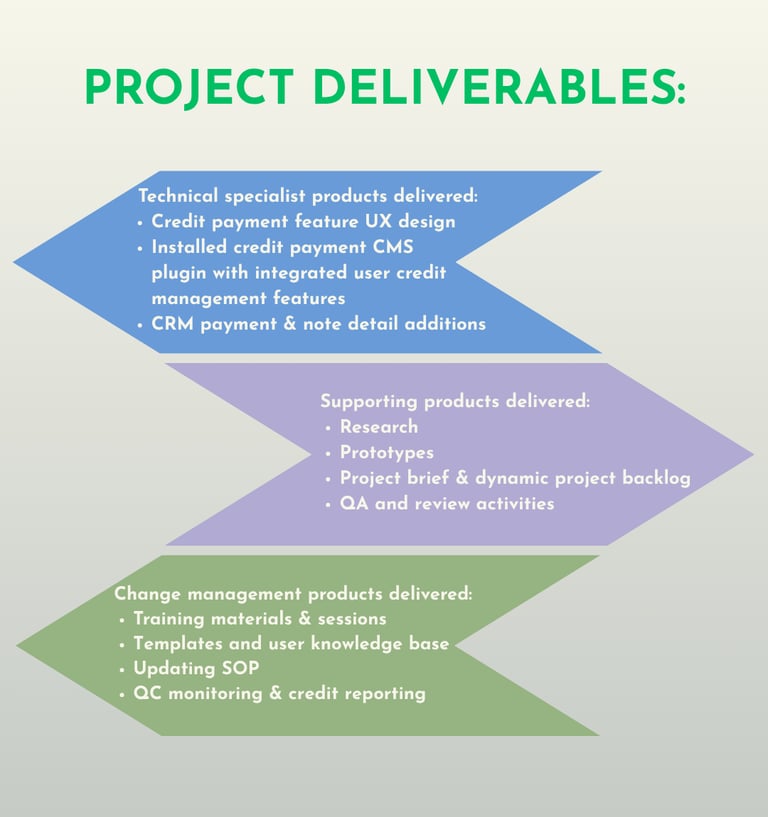
Further training and support for internal teams, including materials and templates
The final review reveals that the 2nd iteration successfully met all requirements, user queries were reduced, and the feature has been fully and successfully integrated into all operations
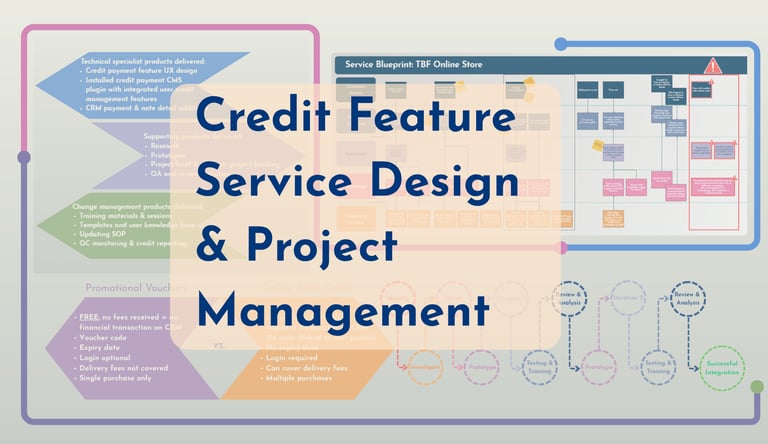
The development of a service blueprint for the E-commerce component of a subscription-based company uncovered a large oversight in their processes. Layering in the backstage functions for alternative payment methods and considering different users for the methods raised a red flag.
The problem? Promotional gift vouchers and paid store credit issued for membership refunds were being processed via the same payment method – one that's intended and appropriate for promotional gift vouchers only. This is despite representing two entirely different business functions, with different requirements and different user types.
The solution? Implementing a separate credit feature more suitable for the paying user, enabling operational efficiency, meeting user needs more appropriately, and addressing compliance issues.
Training & Development
Change Management
The exploration phase involved a thorough analysis of the internal processes, market research into common practice and compliance, reviewing existing customer feedback, and investigating technical limitations that any proposed solutions would need to fit into.
There was sufficient information available about common solutions and technical options, and the project was deemed compulsory and urgent. An iterative approach was employed.
Unsure of how to approach a challenge?
© 2026 Danielle Robertson. All rights reserved.
Danielle Robertson
Service design practitioner, CX strategist, project manager, and communications expert.
