The full service design review for an established training academy
UX Review & Redesign
The approach
Service Design



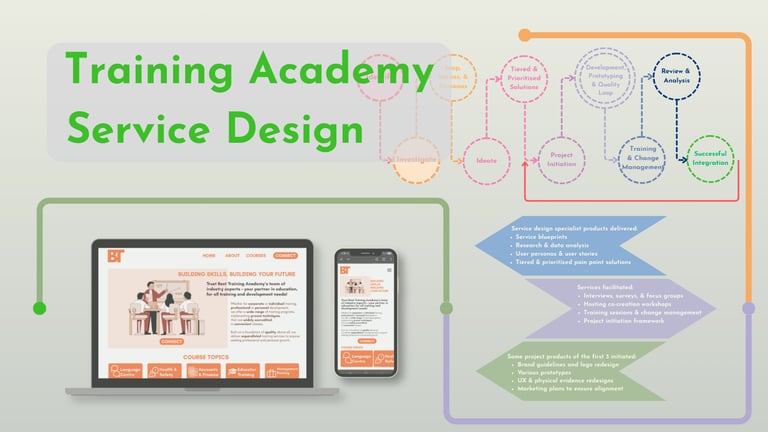
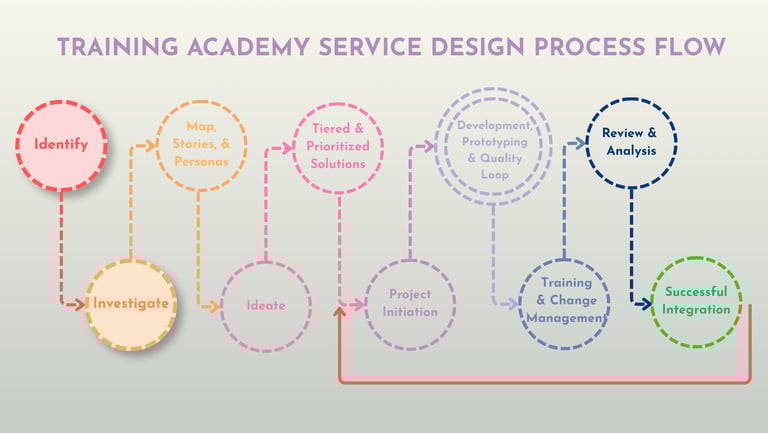
A summary of steps from early in the execution stage:
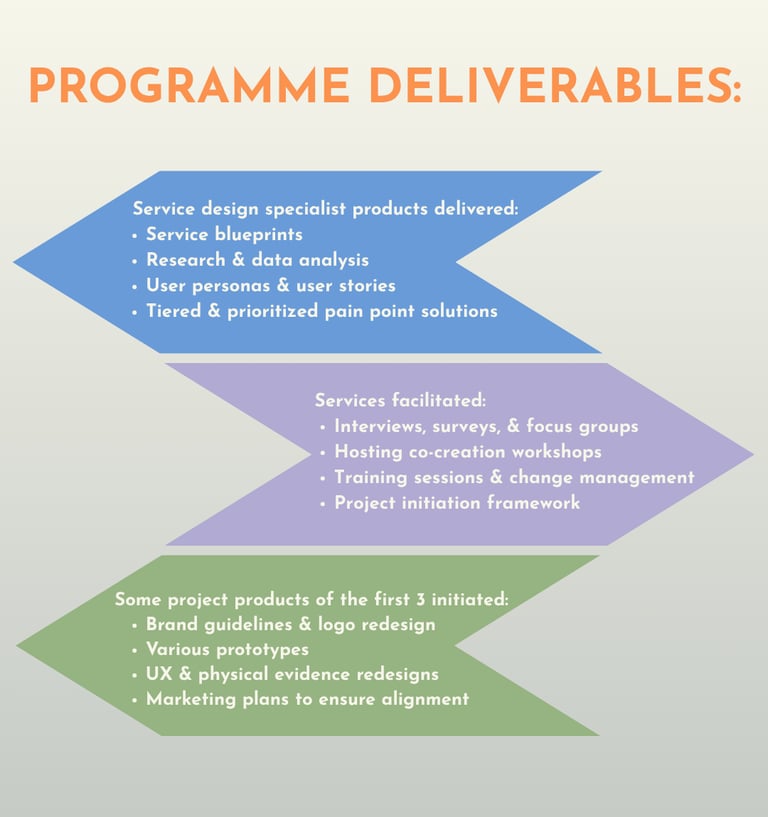
Presented a prioritized list of pain points, as well as tiered solutions for both the highest priority and simplest pain points, and recommendations based on ease of implementation
Simple solutions requiring minimal input and resources, such as proposed scheduling adjustments, can simply be documented, implemented, and monitored, whereas the more complex solutions require separate project initiation
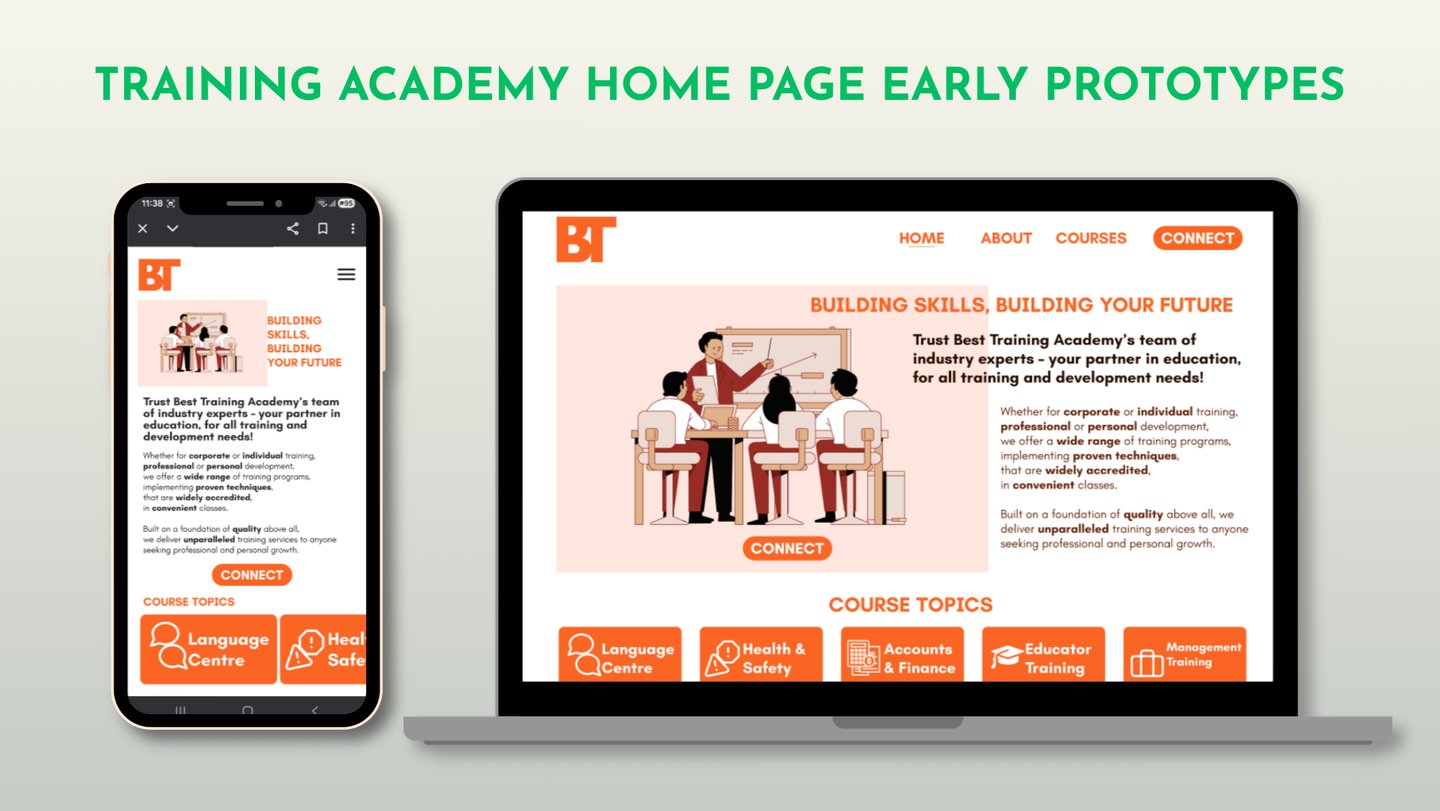
Initiated 3 main projects identified as priorities for the most impact and addressing a large portion of pain points: Branding misalignment corrections, UX and physical evidence redesign, and communication strategy redesign
These projects have some overlapping elements and timelines, and can share project resources, e.g., a single focus group can be used for measuring the suitability of products from multiple projects
These projects collectively involved prototyping, feedback sessions, focus groups, creating brand guidelines, establishing SOP, running employee workshops and training sessions, and more
After all project products are successfully integrated into the business and the benefit realization is reviewed, it is confirmed that the highest-priority pain points and simplest pain points have been addressed
Aside from improved public perception and increased customer satisfaction, thanks to consistent brand image, improved communication, and professional legitimacy afforded by the completed projects, it also lays the foundation for initiatives to improve sales and projects to increase new business
Remaining pain points are prioritized, and new opportunities are assessed to select upcoming projects
This is a conceptual project based on a real organisation – any names, logos and brand-colours pictured have been changed.
The training academy in question offers an array of accredited courses for personal and professional development to both individuals and companies, but falls short in how it presents itself to the public and students, with major inconsistencies across touchpoints and poor communication.
The issues aren’t limited to one area of the business, and include both digital and physical touchpoints. To find the solution requires a large-scale service design review to identify all pain points, prioritize, and address (or initiate projects to address) them.

CX Strategy & Copywriting
Change Management
The initial exploration phase involved a full review of their service offering, including a brand review, user surveys and interviews, customer journey mapping, service blueprinting (of the situation as-is), and employee collaboration.
The execution phase began with taking user stories and developing solution outlines through creative, data-informed ideation.
Each company is different, and in this instance, acute resource limitations were a factor when developing solutions. Additionally, the business had an overwhelming number of pain points that had to be addressed. This resulted in (1) a focus on identifying high-priority pain points and simple pain points, and (2) a tiered-solution offering, where each solution had at least two versions – a best-case solution and a bare minimum solution. The benefit of the tiered approach is that the best-case solution will still be available if resources increase after the bare-minimum fixes have a positive impact.
Want to explore how we can bring your vision to life?
© 2026 Danielle Robertson. All rights reserved.
Danielle Robertson
Service design practitioner, CX strategist, project manager, and communications expert.
